TRAVEL
Too good to be true: Ilocos to Bicol just for 9 hours?
Romar Fernando
April 28, 2021
-
In the previous decades and years, during the time of our parents, they used to only traverse on a ‘North Luzon Expressway’ and a ‘South Luzon Expressway.’
Travelling is not that good during those days. When going north, NLEX tollway would end in Sta. Ines in Pampanga and you shall pass by through numerous towns to reach Tarlac, Pangasinan, Baguio City and to the far most Ilocandia. On the counterpart, the SLEX drive would end in Calamba, Laguna and you shall travel town by town going to Batangas, Quezon and the far-flung Bicol.
Aside from the minimal road networks is the travel time. The longer kilometers you take is the longer agony, and longer time you waste.
But today, as years go by, with the innovative and radical solutions made through infrastructure programs introduced and completed, both by public and private institutions, travel was made easy.
Travel was made easy but can it go easier?
Recently, Department of Pubic Works and Highways (DPWH) secretary Mark Villar has introduced on his Facebook page the Luzon Spine Expressway Network (LSEN) Program.
When the Luzon Spine Expressway Network is completed, travel time between Ilocos and Bicol will be reduced from 20 hours to only 9 hours. #BuildBuildBuild
Posted by Mark Villar on Thursday, April 1, 2021
The LSEN program, when completed, is expected to reduce travel time between Ilocos Region and Bicol Region from 20 hours into nine hours. Too good to be true, right?
“The LSEN program connects the northern and southern parts of Luzon, and some of the road networks included in the program are the South Luzon Expressway (SLEX) and North Luzon Expressway (NLEX), and the recently opened Skyway Stage 3,” the secretary said in an statement.
Included in the LSEN program are the exisitng networks such as South Luzon Expressway (SLEX), the North Luzon Expressway (NLEX), Skyway Stages 1 to 3, the Subic-Clark-Tarlac Expressway (SCTEX), and the Tarlac-Pangasinan-La Union Expressway (TPLEX). Other linkages are expected to be on track as well such as the TPLEX Extension, North Luzon East Expressway (NLEE), Central Luzon Link Expressway (CLLEX), Cavite-Tagaytay-Batangas Expressway (CLTBEX), the SLEX-TR4, SLEX-TR5 and CamSur Expressway. Others were already completed namely the NAIA Expressway, Manila-Cavite Expressway, the Cavite-Laguna Expressway, the Muntinlupa-Cavite Expressway.

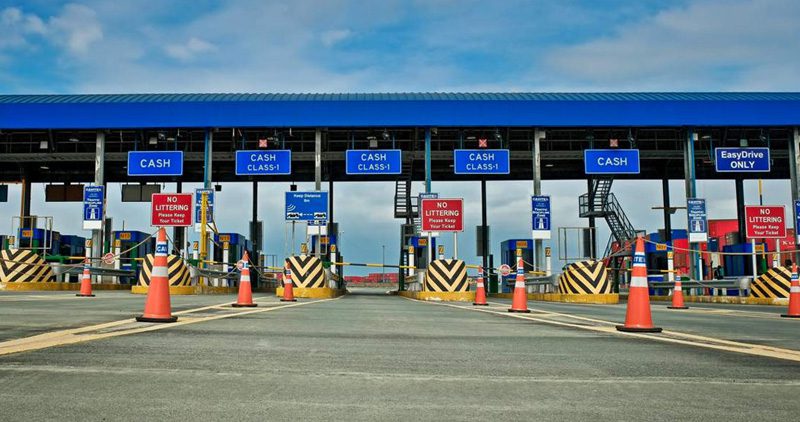
Photo Credit: Rappler
One of the biggest projects in progress is the South Luzon Expressway (SLEX) extension, also known as TR4. It will connect Calamba, Laguna and Lucena City in Quezon. Its construction started in 2019. According to the public works department, packages B and C are 2.58% and 30.61% complete, respectively.
SLEX-TR4 will soon be connected to SLEX-TR5 which is a 416.48-kilometer, four-lane toll road that will stretch Lucena City all the way to Matnog in Sorsogon.
Photo Credit: AutoIndustriya
Secretary Villar did not give an exact or even a rough estimate when will the entire LSEN program be completed. It seems that there’s still a very long way to go before the program materialize. Still, this is something to look forward to in the nearest future.
For now, reserve your travel plans and make it happen as well after this pandemic.
Stay safe and sound!
-
COMMENTS


Related Contents
-
CAVITEX is set to raise its toll rates beginning August 21
August 16, 2023
-
Wilderness: Explore the beauty of hidden sceneries in the Philippines
July 26, 2023
-
Be mindful of these alternative routes in QC during SONA
July 19, 2023